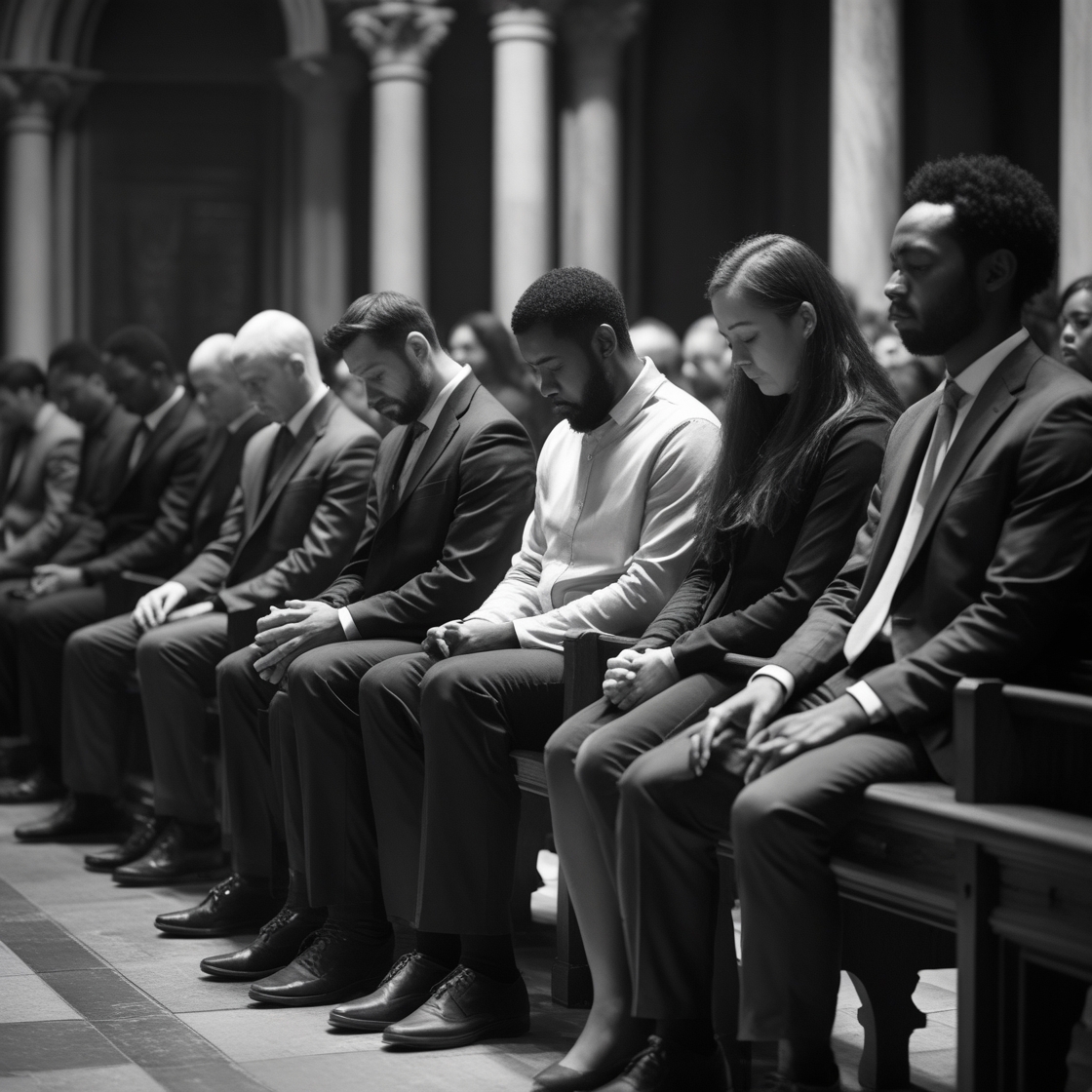

For Christians, the intersection of faith and racial attitudes presents a crucial area for self-examination. While many believers would never consider themselves racist, the reality is more complex. Understanding where you stand requires honest assessment of both your heart and your actions, measured against biblical standards rather than cultural comfort levels.
The Biblical Foundation
Scripture provides clear guidance on how Christians should view and treat people of different races. Genesis 1:27 establishes that all humans are made “in the image of God.” Acts 17:26 declares that God “made from one man every nation of mankind.” Galatians 3:28 states that in Christ “there is neither Jew nor Gentile” regarding spiritual standing. Revelation 7:9 envisions people “from every nation, tribe, people and language” worshiping together in heaven.
These passages establish that racial diversity is part of God’s design, that all races have equal dignity and worth, and that racial barriers are not part of God’s eternal kingdom. Any attitude or action that contradicts these truths conflicts with Christian faith.
Understanding Modern Christian Racism
Christian racism today rarely looks like the overt hatred of previous generations. Instead, it often manifests in subtler forms that can be harder to recognize and address:
Spiritual Superiority: Using Christian identity to avoid examining racial attitudes, assuming that being a believer automatically makes you free from racial bias.
Cultural Blindness: Failing to recognize or acknowledge how race affects others’ experiences, dismissing racial concerns as “worldly” rather than matters of justice.
Selective Scripture: Emphasizing Bible verses about unity while ignoring passages about justice, or using spiritual language to avoid addressing practical racial issues.
Comfort Zone Christianity: Remaining in racially homogeneous Christian communities and using “personal preference” to justify avoiding meaningful cross-racial relationships.
Litmus Test #1: The Friendship Test
The Question: Do you have meaningful, reciprocal friendships with people of different races?
Why It Matters: Jesus ate with, stayed with, and built relationships with people across social and ethnic barriers. If your close friendships are exclusively or overwhelmingly with people of your own race, it may indicate unconscious bias or comfort with segregation.
Red Flags:
- You can’t name three people of different races who would consider you a close friend
- Your social gatherings, dinner invitations, and recreational activities consistently exclude people of other races
- You justify this by saying you “just naturally” connect with people like yourself
- You feel uncomfortable or awkward in predominantly non-white social settings
Green Flags:
- You actively cultivate friendships across racial lines
- You’re comfortable being the racial minority in some social situations
- People of different races feel welcomed and valued in your home and social circles
- You learn from and are influenced by friends of different racial backgrounds
Litmus Test #2: The Justice Response Test
The Question: How do you respond when racial injustice is documented or alleged?
Why It Matters: The Bible consistently commands believers to care about justice and defend the oppressed. Your initial response to claims of racial injustice reveals your heart attitude toward people of other races.
Red Flags:
- Your first instinct is always to defend the accused rather than show concern for potential victims
- You immediately look for reasons to discredit or dismiss racial discrimination claims
- You feel more upset about being asked to examine racial issues than about the possibility that people are being harmed
- You use phrases like “playing the race card” or “everything is about race now”
- You’re more concerned about your comfort than others’ pain
Green Flags:
- You take allegations of racial injustice seriously and seek to understand the situation
- You show genuine concern for people who feel marginalized or discriminated against
- You’re willing to examine systems and institutions for potential bias
- You support efforts to ensure equal treatment and opportunities for all races
- You recognize that your perspective may be limited and seek to learn from others’ experiences
Litmus Test #3: The Discomfort Test
The Question: What makes you most uncomfortable when discussing race?
Why It Matters: Our areas of discomfort often reveal our biases and blind spots. Christians should be able to engage racial topics with grace and humility.
Red Flags:
- You get angry or defensive when your racial attitudes are questioned
- You feel victimized when asked to examine privilege or bias
- You’re more upset about being called racist than about the possibility that you might have hurt someone
- You avoid churches, events, or conversations where race will be discussed
- You shut down racial conversations by changing the subject or claiming they’re “divisive”
Green Flags:
- You can listen to difficult feedback about racial issues without becoming defensive
- You’re more concerned about learning and growing than about protecting your reputation
- You can acknowledge your limitations and blind spots regarding race
- You welcome opportunities to have honest conversations about racial issues
- You recognize that temporary discomfort is worth it for growth and understanding
Litmus Test #4: The Church Integration Test
The Question: How do you respond to increasing racial diversity in your church or Christian community?
Why It Matters: Since heaven will be racially diverse, Christians should welcome and work toward racial diversity in their earthly worship communities.
Red Flags:
- You feel uncomfortable when your church becomes more racially diverse
- You resist changes in worship style, leadership, or programming that reflect cultural diversity
- You make comments about wanting your church to stay the way it “used to be”
- You assume that people of other races need to fully assimilate to your cultural expressions of Christianity
- You leave or consider leaving when your church becomes “too diverse”
Green Flags:
- You celebrate increasing racial diversity in your Christian community
- You support efforts to make worship and programming welcoming to different cultural backgrounds
- You’re willing to adapt and learn new ways of expressing faith that honor different cultures
- You advocate for diverse leadership that reflects your church’s racial makeup
- You see racial diversity as a blessing that enriches your spiritual community
Litmus Test #5: The Privilege Acknowledgment Test
The Question: Can you acknowledge ways that your race may have provided advantages or disadvantages?
Why It Matters: Humility is a core Christian virtue. If you can’t acknowledge the reality of how race has affected your life—positively or negatively—it may indicate pride or blindness.
Red Flags:
- You insist that your race has never provided any advantages
- You become angry when the concept of racial privilege is discussed
- You claim that acknowledging racial advantages is itself racist
- You compare your struggles to those of other races as if they cancel out racial dynamics
- You refuse to consider how your race might affect how others perceive or treat you
Green Flags:
- You can honestly assess how your racial identity has shaped your experiences
- You acknowledge both the advantages and disadvantages your race may have brought
- You recognize that acknowledging privilege doesn’t diminish your personal achievements
- You use your understanding of racial dynamics to help others and promote justice
- You’re grateful for advantages while working to ensure others have similar opportunities
Self-Examination Questions
Beyond these tests, consider these deeper questions:
- When you pray for your enemies, do you include people who have committed racially motivated crimes?
- Do you actively seek to learn about the experiences of Christians from different racial backgrounds?
- Would people of other races describe you as an ally and advocate?
- Do you speak up when you hear racially insensitive comments, even when no one of that race is present?
- Are you more concerned about being perceived as racist or about actually harboring racial bias?
Moving Forward
If these tests reveal areas of concern, the Christian response isn’t shame or defensiveness but repentance and growth. Consider these steps:
Confession: Acknowledge specific areas where your attitudes or actions haven’t aligned with biblical principles.
Education: Read books, attend workshops, and seek to understand racial experiences different from your own.
Relationship: Intentionally build meaningful friendships with people of different races.
Action: Support efforts to address racial inequality in your community and institutions.
Accountability: Ask trusted friends of different races to help you identify blind spots and areas for growth.
The Ultimate Standard
The goal isn’t cultural acceptance or political correctness—it’s conformity to Christ. Jesus crossed every social barrier of his time, defended the marginalized, and called his followers to love their neighbors as themselves. For Christians, examining our racial attitudes isn’t about being “woke”—it’s about being awake to the ways we may have fallen short of Christ’s example.
This self-examination can be uncomfortable, but it’s necessary for spiritual growth. The Christian who refuses to examine their heart on racial issues may be missing opportunities to become more like Christ and to participate in God’s work of reconciliation in the world.
Remember, the presence of racial bias doesn’t disqualify you from Christianity—it makes you a candidate for grace and transformation. The question isn’t whether you’re perfect on racial issues, but whether you’re willing to let God’s Spirit shape your heart to align more closely with His love for all people.